Free · no sign-up · fifteen minutesMaths Escape Rooms
Three narrative rooms, three locks each, fifteen minutes a room. They are built to end a lesson rather than fill one, and to be played by three or four students round one screen. More rooms are being written and will appear here as they are finished.
What we would like to know
Anything at all, but these are the three things nobody here can answer from a desk:
- Is fifteen minutes right? The per-lock timings are the puzzle author’s own and have never been run against a real class.
- Is it too easy once they get going? The difficulty is meant to come from not knowing which clue belongs to which lock — not from harder arithmetic. If a group works that out instantly, say so.
- Does the joke land? Every room has a comic cost for getting it wrong. If any of them reads as having a go at a student rather than at a member of staff, that is a bug.
Every room has a teacher page with the answers, the hint ladder, the misconception each lock is built around, and where every clue is hidden.
The rooms
Ordered easiest to hardest. Each one states what failing costs before you start.
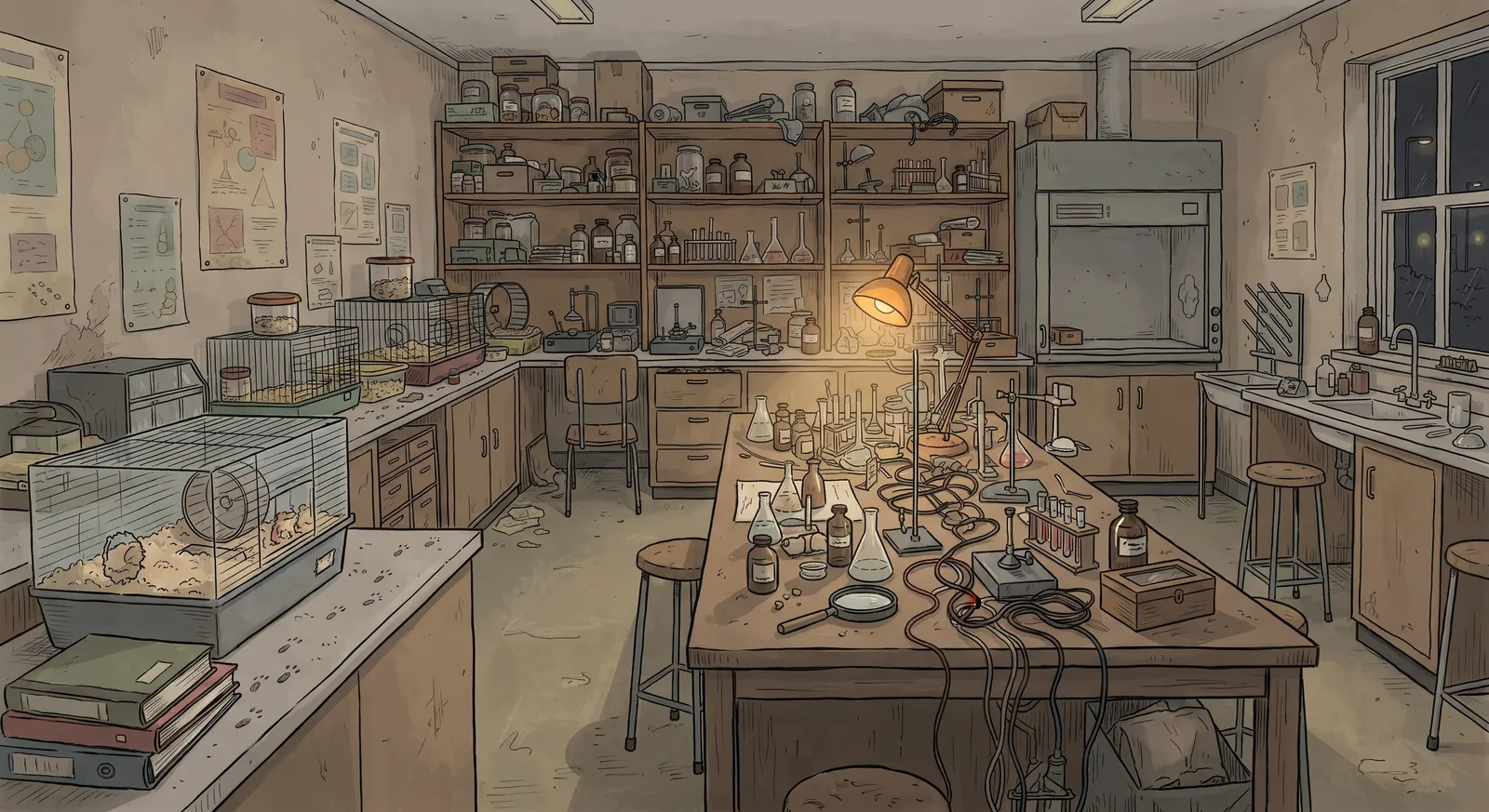
The Great Hamster Heist
Lungey has confiscated Pythagoras and shut him in an old cage at the back of the science lab. Fifteen minutes to get him home before the bell. Circumference, upper bounds, gradient.
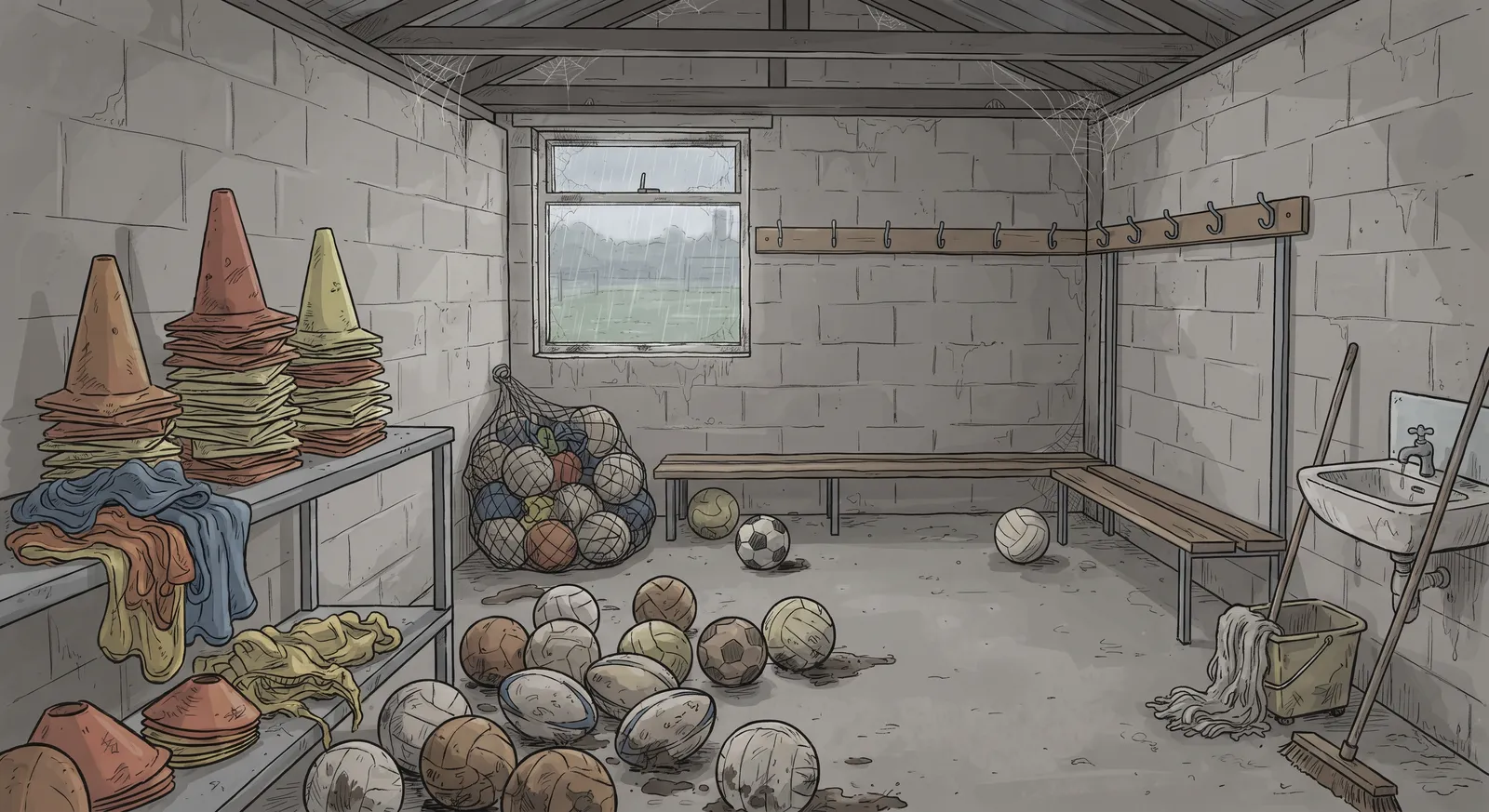
The P.E. Store Rebellion
Freezing, raining sideways, and cross-country is on. Get the arena inflated indoors instead. Sectors, inverse proportion, linear sequences.
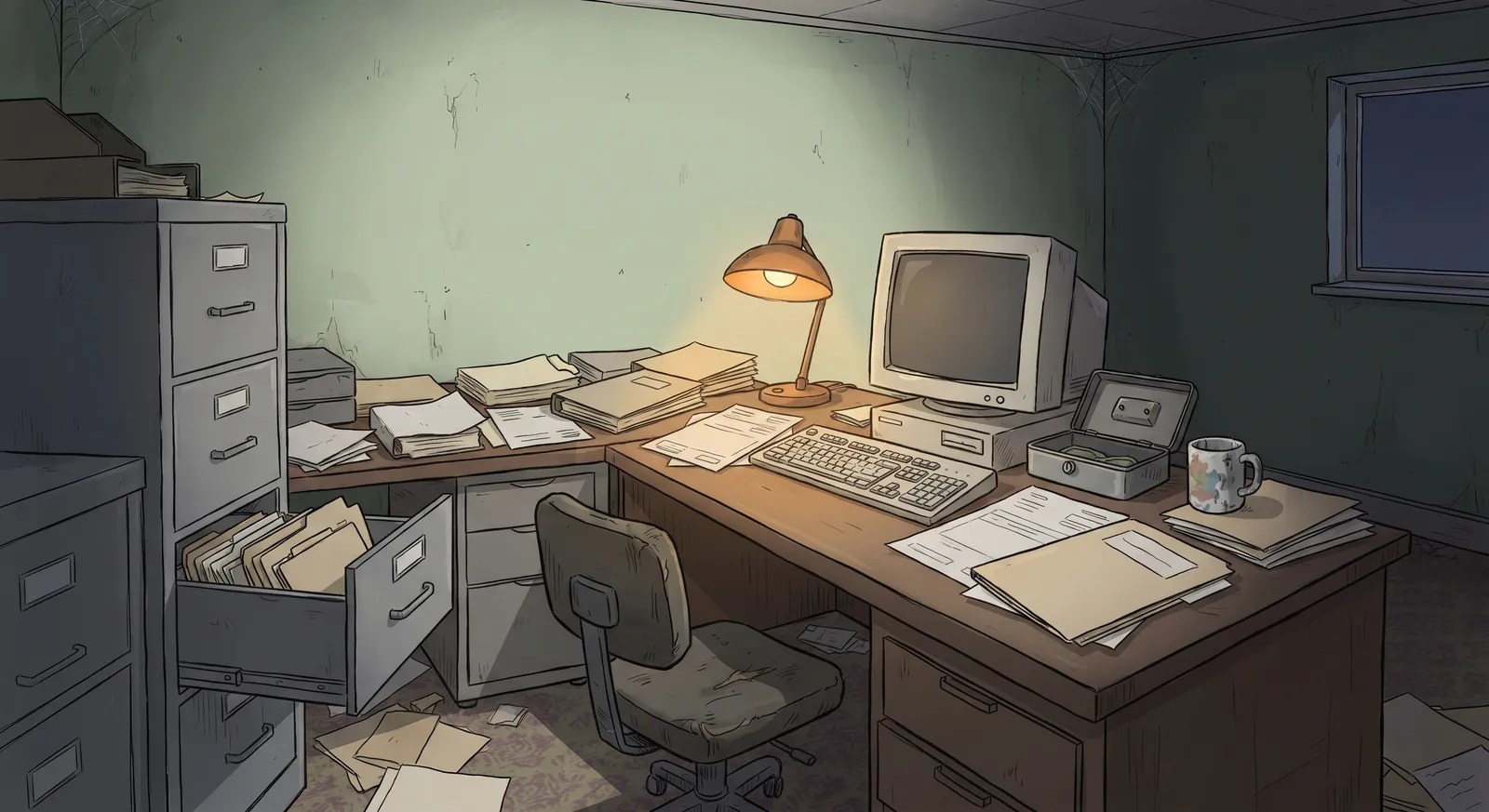
The Prom Budget Embezzlement
The head has spent the prom fund on a life-sized bronze statue of himself, and he is out of the office for fifteen minutes. Reverse percentages, compound growth, Venn diagrams.
How they are built
The maths is the action, not a toll gate. There is no question box anywhere in these rooms. Every lock is an instrument — a dial, a slider, a keypad — and the only way to set it correctly is to work out the value the room is describing. Setting the dial is the answer.
The clues do not say which lock they belong to. Each room has eight things to search and six notes hidden among them, two of which are blanks. Deciding which note goes with which instrument is the first real piece of thinking, and it is deliberately where the difficulty sits.
A wrong setting costs 45 seconds, and one wrong setting per lock costs more than that. Each lock is built around the specific mistake a student is most likely to make. Enter that value and the room says so by name — it does not just mark you wrong.
The numbers change every time, and never repeat back to back. Each lock carries a library of number sets and draws one per play — never the one it gave last time — so play again and every figure in the room is new. The story, the instruments and the mistake being taught stay put while the figures move. Across the three rooms that is 74 verified number sets and over 1,500 combinations, from 400 in the prom office to 720 in the P.E. store. The hints, the worked solution and the notes hidden round the room all re-write themselves to match, and every set has been machine-checked to have exactly one settable answer.
Progress survives a refresh, hints are free and come in three levels, every instrument can be typed into as well as dragged, and the Aa button in the corner switches to easier-reading text.
The teacher page follows the game. Open it from inside a room and it shows the numbers that room actually drew — answers, hint ladder, worked solution and every clue as the students are reading it. Start again and it updates itself.
There is also an older, longer room on the main site — The Perfect Prank — built to a 40-minute spec before the fifteen-minute format settled. It is the outlier, kept as the long-form example.